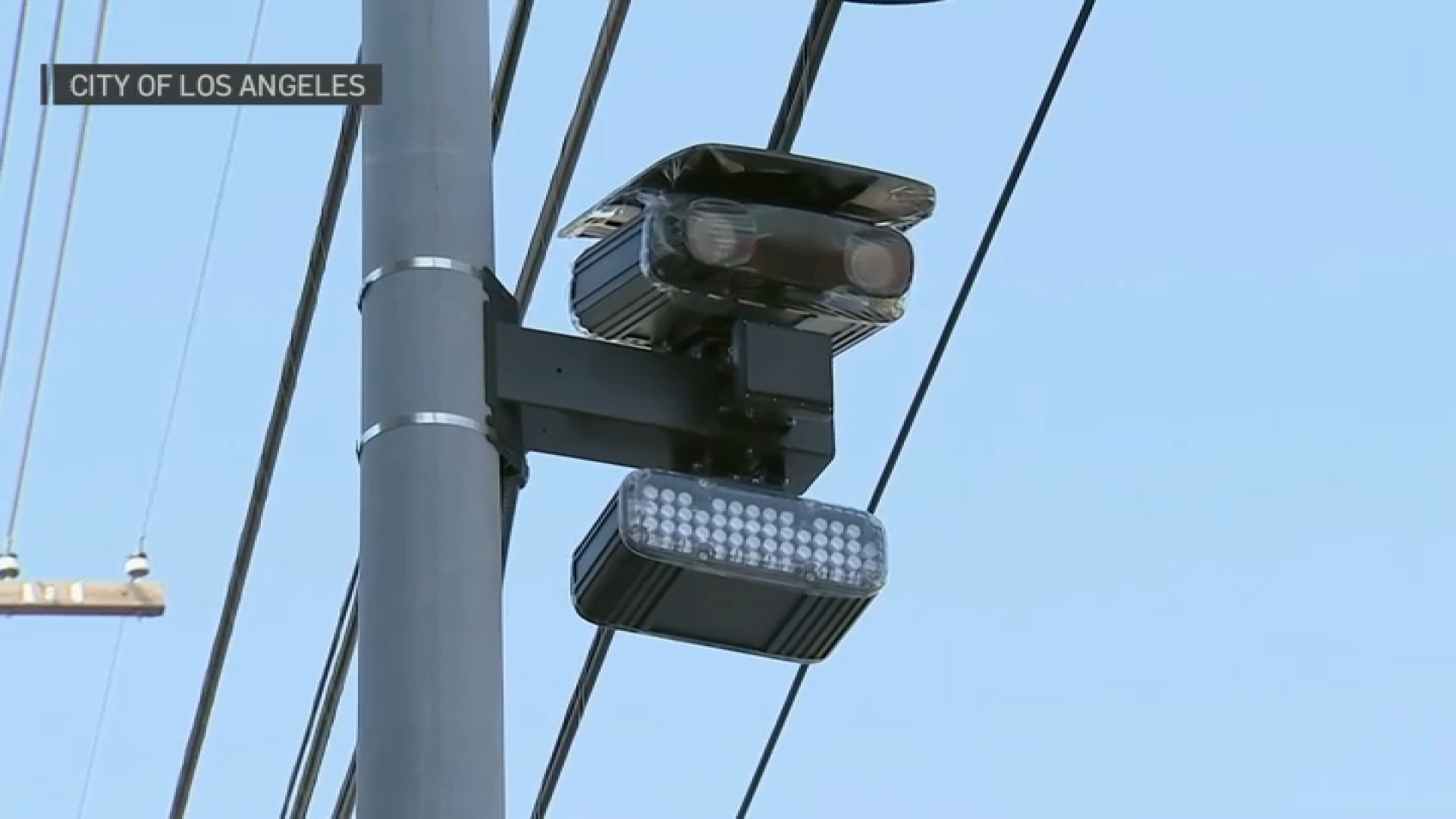
The Los Angeles Police Department will be able to move forward with a pilot program to install new automatic license plate readers on some streetlights in the San Fernando Valley after the LA City Council failed to block the plan.
The three-month program, which had already been approved by the LA Police Commission in September, will begin in outgoing Councilmember Bob Blumenfield’s Council District 3, which includes Encino, Woodland Hills and Tarzana.
The LAPD’s contract with Axon Enterprise for the no-cost pilot will clamp cameras to the tops of streetlights, drawing power from the lights’ electrical connections, according to Ubicquia Inc., a subcontractor that would install the cameras.
But a majority of the 15-member council wanted to stall implementation of the pilot, pushing to incorporate additional guardrails for privacy protection.
Councilmember Hugo Soto-Martinez, who proposed that the council send the pilot program back to the LAPD board for further review, pushed for an independent audit of how data captured by the cameras is used while calling for limits on who can access the data and how it can be used. His motion, which needed 10 votes to pass, failed by one vote in a 9-6 vote.
“If we look at it through just the public safety lens, we can find a lot of reasons why it’s good. I’m concerned about data sharing and surveillance,” Soto-Martinez said.
Councilmember Eunisses Hernandez, who also wanted stricter limits, said the cameras may be unnerving to communities that have been traumatized by ongoing immigration raids. The ACLU slammed Flock, another company behind automatic license plate-reading cameras, for sharing data with U.S. Customs and Border Protection and the Department of Homeland Security.
“This technology helps solve crimes, which I agree with, I want us to be safe, and I’m not dismissing that. I represent communities that experience violence experience trauma that deserve to feel safe in their neighborhoods, but public safety should not come at the expense of the very people we’re supposed to be protecting,” Hernandez said.
Blumenfield and Councilmembers John Lee, Adrin Nazarian, Traci Park, Monica Rodriguez and Council President Marqueece Harris-Dawson opposed the motion.
The Police Commission approved the pilot after the Police Department put many new limits on the use of the cameras, including stopping most data sharing outside the LAPD, such as with other police agencies that could, in turn, share the data with Immigration and Customs Enforcement (ICE).
The commission also said the agreement forced Axon to give the LAPD total control over what happens to the information after the images are scanned for license plate information.
“It helps investigators develop leads, identify patterns, pursue cases that might otherwise be difficult to solve,” Councilmember Lee, who supports the pilot, said. “Ultimately it means a better ability to hold offenders accountable and help prevent additional crimes from occurring.”
The LAPD’s updated policy would be implemented at the same time as the pilot program. Changes to the department’s ALPR policy include:
City News Service contributed to this report.
This story uses functionality that may not work in our app. Click here to open the story in your web browser.