
The puzzle on the dining room table. The building kit bought for yourself. The collectible on the shelf. The favorite childhood movie you are perfectly happy to watch again.
There is a name for it: “kidulting.” And a new Harris Poll report suggests that, for many Americans, these small pleasures have become part of how they unwind, connect with others and make everyday life feel a little lighter.
The Rise of Kidulting Report finds that 80% of U.S. adults participated in playful activities for their own enjoyment during the past year. More than half, 52%, say kidulting is one of their main forms of self-care, while 75% agree that playful hobbies help them stay emotionally resilient.
The term covers adults enjoying products, hobbies and experiences traditionally associated with childhood — from collecting toys and building models to games, crafts and immersive outings.
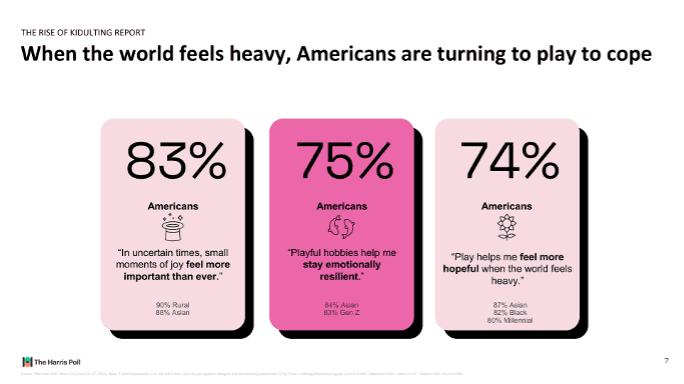
The Harris Poll, The Rise of Kidulting Report, October 2026
Survey responses reflect adults’ perceptions of play and emotional well-being.
Younger adults are especially enthusiastic. Among Gen Z and millennials combined, 71% bought board games or puzzles for themselves in the past year, 66% purchased building or model kits, and 65% bought craft kits. Coloring and sticker books also reached 65%.
Then there are “blind boxes” — sealed packages containing a surprise collectible. Fifty-seven percent of Gen Z and millennials reported buying those for themselves, compared with 16% of Gen X and boomers combined.
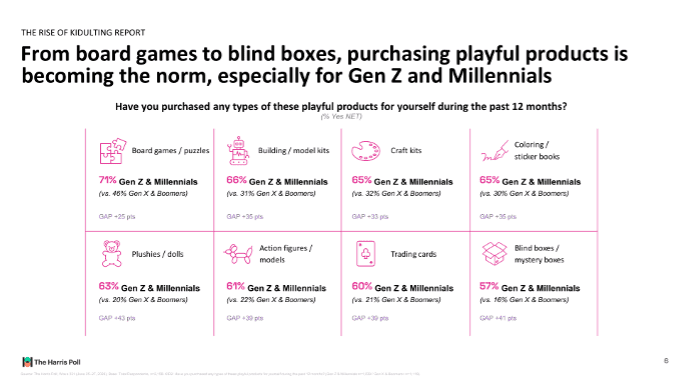
Purchases were for respondents themselves during the previous 12 months.
Among respondents who had participated in play, 89% spent something on playful activities or products for themselves over the past year. Sixty-five percent spent at least $100 in one or more categories, and 13% spent at least $500 in one or more categories.
“Two-thirds of Gen Z and millennials now call kidulting one of their main forms of self-care. That’s not a punchline. That’s a generational shift in how young Americans are managing their mental health, and they’re backing it up with real spending,” said Libby Rodney, chief strategy officer at The Harris Poll, in a statement accompanying the report.
The appeal reaches beyond buying something. Sixty-four percent of Americans say play helps them feel less isolated and more connected to other people. Sixty-two percent say sharing their playful interests makes them feel seen and accepted.
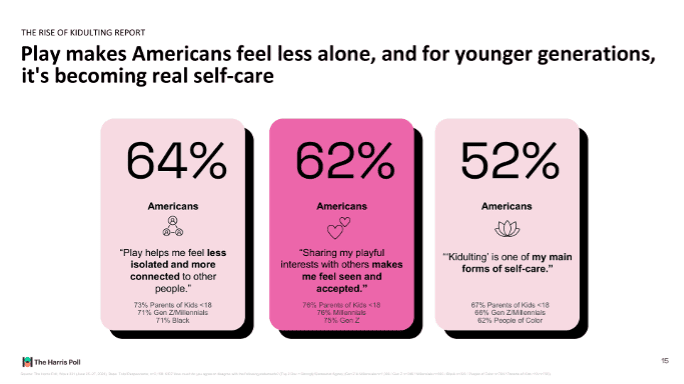
Percentages indicate respondents who strongly or somewhat agreed.
Parents are joining in, too. Among parents and guardians of children under 18, 89% said creating family memories motivates their participation in play, and 87% cited introducing their children to something they loved growing up. Eighty-three percent also cited their own enjoyment.
Cost is the biggest barrier to spending more: 32% of adults say playful products and experiences feel too expensive. Another 25% worry the spending is not responsible, while 24% say they do not have enough time.
Still, adults see room for more. Seventy-seven percent believe brands underestimate their appetite for playful experiences designed for them. Adult-only nights at theme parks, museums or zoos topped the wish list at 62%, followed by nostalgic movie or cartoon marathons at 60%.
For Rhode Island businesses and cultural organizations, those findings suggest an opening for affordable game nights, creative workshops and nostalgic events that welcome grown-ups.
Growing up comes with responsibilities. The report suggests many Americans would like to leave a little room for play, too.
About the research: The Harris Poll surveyed 2,158 U.S. adults online June 25–27, 2026. Harris describes the sample as nationally representative. Findings are national, not Rhode Island-specific; responses about emotional well-being are self-reported.
Read the full report, HERE:

The post Never too old to play: The rise of “kidulting”. Comfort, connection, and a little childhood joy appeared first on RINewsToday.


