
Have a question about Philly’s neighborhoods or the systems that shape them? PlanPhilly reporters want to hear from you! Ask us a question or send us a story idea you think we should cover.
For architect Antonio Fiol-Silva, a building should do more than serve the people who use it. It should reflect the community around it and be rooted in true collaboration with the client.
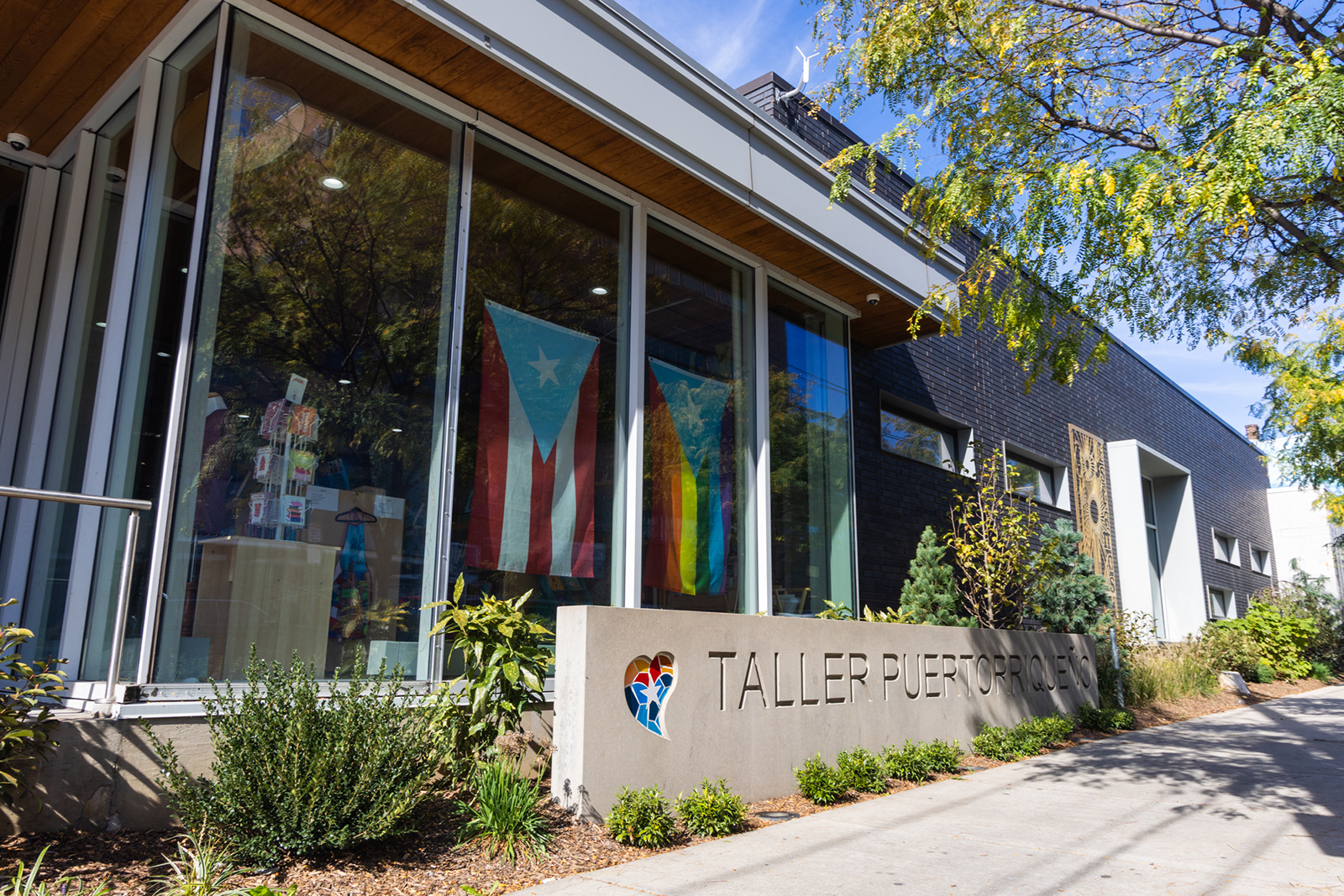
“Our approach is really to look at the totality of things,” Fiol-Silva said recently inside El Corazón Cultural Center, the home of Taller Puertorriqueño, a nonprofit in North Philadelphia dedicated to celebrating and preserving Puerto Rican arts and culture.
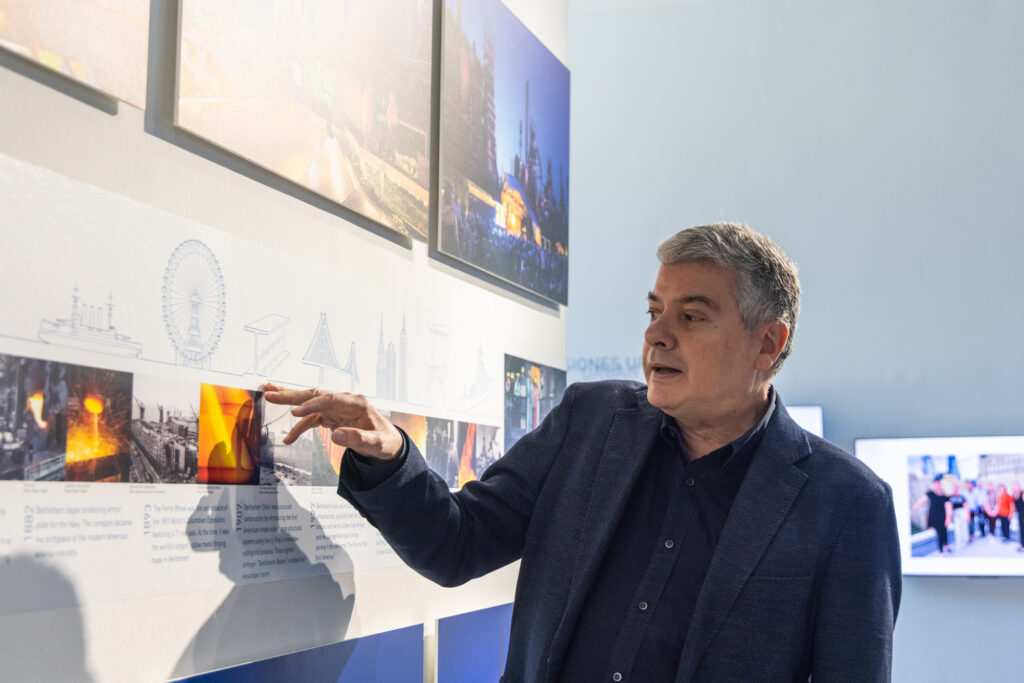
A native of Puerto Rico, Fiol-Silva considers the modern building on North Fifth Street — Taller’s permanent home for the last decade — his most heartfelt expression of that principle, making it a fitting location for a retrospective exhibit of his venerable career.
“En Su Sitio” highlights a variety of projects that SITIO architecture + urbanism, Fiol-Silva’s Philadelphia-based firm, shaped in the city and around the country, including several residential towers, an outdoor music venue and a pair of high-profile recreation centers.
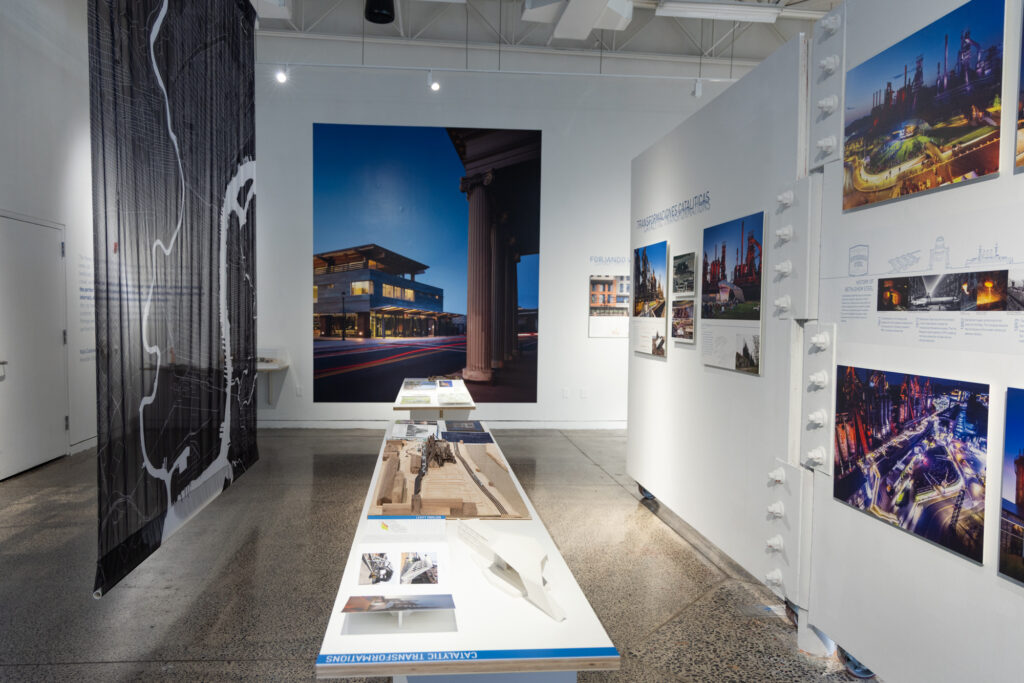
It’s the building housing the exhibit, however, that gets the greatest focus. From a pair of elevated arches in El Corazón’s lobby, photos and architectural models help visitors trace Taller’s move from a basement to a space it views as a gateway to the city’s Puerto Rican community — a community the organization wants to preserve as private development and the threat of gentrification creeps toward its doors.
The center is located in the Fairhill section of North Philadelphia, a high-poverty neighborhood about a mile from Norris Square and East Kensington, and a short ride from Fishtown — communities that have experienced swift gentrification since El Corazón opened.
In nearby Kensington, property values continue to rise — sharply — as residents in parts of eastern North Philadelphia, which includes Fairhill, see less severe but nonetheless significant increases.
“We’re having a lot of conversations in the world about visibility, and who has a voice and who doesn’t. And the fact that we’re amplifying the voices of Puerto Rican artists and culture bearers, I think, is a critical piece of that push back,” Taller’s executive director, Erikka Goslin, said.
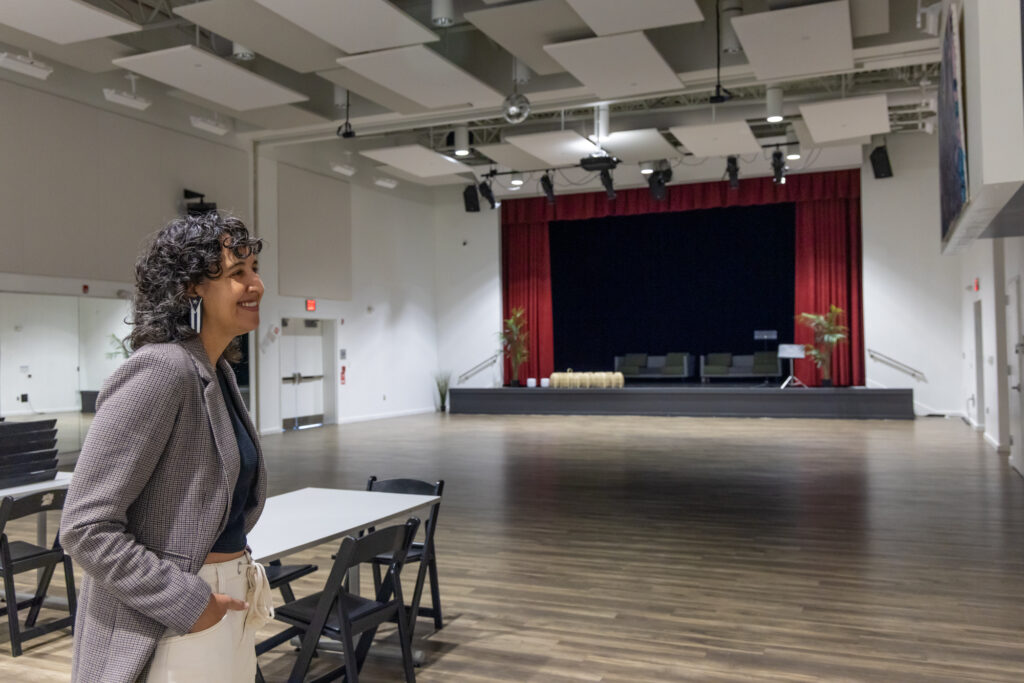
Owned by Taller, the center opened in 2016 after a relentless planning and fundraising effort spearheaded by Dr. Carmen Febo San Miguel, the nonprofit’s longtime executive director. She retired in 2021 after spending 22 years at the helm.
In 2007, early on in her tenure, the Commerce Department awarded Taller with a $1.5 million grant for the project — seed money the organization used to bring in more funding ahead of construction. The city later gifted Taller a large vacant hospital parking lot near Lehigh Avenue for the organization’s new home.
By then, the organization was operating out of two modest buildings and bursting at the seams.
“I think we’ve done miracles with the space we have, but it’s time to have a vision and a dream for what could be. And that is what this building represents for us,” Febo San Miguel said in 2014.


